Saturday, 15 August 2026

A Victorian Dinner

 dessert food in tray

Image from Unsplash, taken by Richard Iwaki

Do you eat avocado toast? Because if you do, there will be people out there who will label you as soon as you confess. Do you eat ramen? How about swordfish steak? Do you eat tofu? How about truffle oil in your omelet aux fines herbes? Food can come with more labels than ‘best served hot’.

Throughout the ages the difference between the peasant’s pot and the lord’s table was always there. However, in Great Britain during the nineteenth century, there were new differences and complications.

As the events of ‘Out of the London Mist,’ set in 1900, were unfolding, households were coming to grips with new foods and ideas. Curries had been popular in Great Britain for over a hundred years at this point, and were becoming more widely eaten as the men and their families returning from Colonial India brought back a nostalgia for the food they had enjoyed. Along with curries, fish and chip shops started opening, often credited to Eastern European immigrants. Markets now had such exotic stuff as bananas as well as the familiar onions and turnips, and the grocer now had stacks of meat in tins from far off Australia and South America.

Along with the new foods appearing on the tables, new social distinctions were causing confusion. As the Industrial Revolution progressed, the Middle Classes of doctors, lawyers and business men expanded massively. Suddenly there were polite households, desperate to keep up to high standards but completely unaware of how to run a household with servants. Housewives in the new, brick-built villas of the expanding suburbs were faced with a swathe of social difficulties. How does one ‘leave a card’? How should one pack a picnic? What are the duties of the second housemaid?

Instruction manuals on cooking and housekeeping proliferated as women who once would have stayed at home and cooked the stews and puddings that fuelled the working class were suddenly and unexpectedly thrust into a more supervisory role. The most famous of these was the weighty Mrs Beeton’s Household Management. It was originally published in 1861, and by the time of Out of the London Mist it had a huge following and had already gone to many editions. Along with clear, logical and precise instructions for how to clean a bedroom and how to lay a fire are cleaning tips (mirrors should be cleaned with gin and an old silk handkerchief), morality (‘Charity and Benevolence are duties that a mistress owes to herself as well as to her fellow creatures’), etiquette (‘in giving a letter of introduction, it should always be handed to your friend, unsealed’) and several hundred recipes.

I love reading recipe books. I don’t necessarily use them, and no-one should expect fine dining from me, but I love the social history behind the food. Along with such recipes for dishes such as a toast sandwich (yes, a piece of toast between two slices of bread), an Indian Dish of Fowl (cold, cooked chicken seasoned with curry powder and sautéed and served with fried onions) and Collared Calf’s Head (I always skip that one) are recipes for sumptuous desserts, elegant entrees and some very intriguing recipes for liqueurs.

Mrs Beeton was aware that most of her readership were middle class and quite content with plain cooking with a cook and a housemaid. Lady Clara grew up in such a household, and the meals that were served to John Farnley were very middle class in nature with mutton featuring heavily. However, housekeeping books always include the aspirational and Mrs Beeton included plans for formal dinners of the sort that John Farnley would have found familiar.

A suggested formal dinner for October, for six persons, starts with Hare Soup, Broiled Cod a la Maitre d’Hote, and Haddocks with Egg sauce. The entrees are Veal Cutlets garnished with Green Beans and Haricot Mutton. The second course is Roast Haunch of Mutton, Boiled Capon and Rice and Vegetables. Finally the third course would be wheeled in with Pheasants, Punch Jelly, Blancmange, Apples a la Portugaise, Charlotte a la Vanille and Marrow Pudding. After all that culinary splendour, there would be coffee, fruit and liqueurs before the ladies left the room and the gentlemen enjoyed their port and cigars. I have stomach ache just thinking about it.

Of course you would not have a full plate of each dish placed relentlessly in front of you. Instead you could take some of each or just have a portion of one of the offerings. Even so, it was a hefty amount of food laid on the table. Mrs Beeton was much more realistic with plain family dinners. One October menu starts with ‘the remains of a codfish flaked and warmed in a Maitre d’Hote sauce’, followed by cold mutton and salad, veal cutlets, rolled bacon, French beans and potatoes and followed by an arrowroot blancmange with stewed damsons. That would be much kinder to the household bills, though still extremely substantial.

Food was very different in the East End of London. In the overcrowded slums, it was rare to find a family with access to the basic means to cook. Houses often were crammed with a different family to each room. Cold and draughty attics and dank, dark cellars were all crammed in with the rest of the house and shared communal washhouses and toilets at the end of the street. Food was bought elsewhere, usually from the street vendors. A halfpenny could get you some hot eels in broth or some pea soup. You could buy baked potatoes, whelks, oysters (then very much a staple of the poor), pies and cold meat from hundreds of street vendors. If you had a few pennies there were stalls selling nuts, fruit, pastries, coffee, tea, cocoa and cakes, all of varying quality. There were no food inspectors checking whether the food was safe. One of the regular sights were a herdsman selling milk fresh from a cow. At least then you could be sure of what you were getting and its freshness.

And on every corner there was a pub, and cheap gin was always available.

Less well known than Mrs Beeton, Alexis Soyer produced a shilling cookbook aimed at the working class. Soyer was a Frenchman who had moved to England and was a celebrated chef at the Reform Club. He was not, however, merely a celebrity chef. He advised the British Army on food and supplies during the Crimean War and took an active part in organising soup kitchens during the Irish Famine. His aim was to help those poorer people who couldn’t afford the veal cutlets that Mrs Beeton described. Instead he described how to make a hasty pudding, how to cook a cow heel for a good soup or stew and how to buy meat that, while not of the first quality, is still fit for eating.

Many of the East End would be unable to read the book, and they would have had no access to any sort of stove or fire to use for cooking, but it was a useful resource for those struggling in less straitened circumstances. Soyer described his meals clearly and methodically, always aware of the meagre resources available to the poor. One of his recipes seems very thin. ‘Poor Man’s Potato Pie’ which is sliced potato, laid in a dish with some suet or dripping, seasoned with salt and pepper and covered with pastry. Soyer suggested that perhaps some smoked herring could be added for flavour. For many of the people huddled in the streets where John Farnley pursued his brother’s murderer, even if they could afford the potato and fat and the pastry to go over it, the access to any form of fire that could cook it was out of their reach.

This is a snippet pulled from my research for Out of the London Mist, a steampunk novel set in Victorian London where there is more than just food barrows hiding in the East End in the London fog. - available from Amazon.

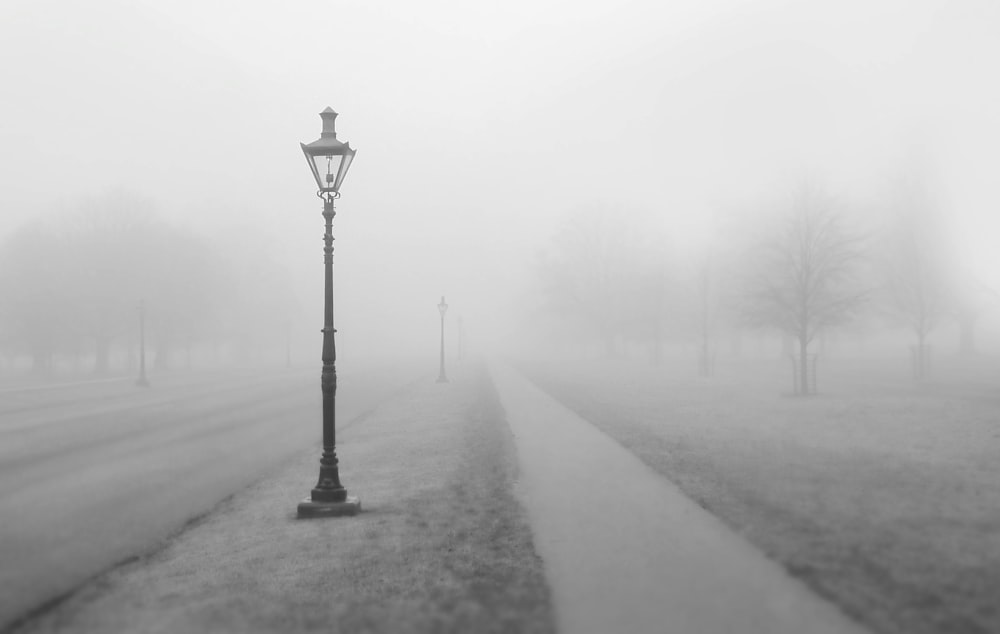
A London Peculiar

 grayscale photo of street post with smoke

Image by Rory Bjorkman on Unsplash

My novel, Out of the London Mist takes place during a prolonged period of smog, or a London Peculiar. Over the centuries, London became known for its noxious, choking fogs that were sometimes called ‘pea-soupers’ as they were as thick as pea soup. Other countries around the world have suffered from smog, but London became known for them at an early date due to an uncomfortable set of circumstances.

The London Peculiar formed when fog settled and absorbed the fumes and soot of the myriad of fires that fuelled England’s capital. When London, or Londinium, was first built by the legions on the low-lying Thames estuary, and so subject to sea fogs, the soft woodsmoke was not such a problem. However, by the twelfth century, London was the largest city in England, with around twenty thousand souls. Not only did the population use open fires and flame filled ovens for heating and cooking, but many of them were busy with the industry and commerce that was fuelling London’s growth, including large scale iron and glass works. At the same time, wood became expensive as the demands of Edward I’s military expansion and castle building made a diminishing resource even scarcer. London turned to coal.

Woodsmoke is not safe, and, when mixed with the fogs that rolled in through the estuary, would not have been pleasant in concentration, but coal has its own hazards. Like wood, burning coal produces carbon monoxide that, when trapped in the fog, would be far from healthy. Coal, unfortunately, also produces such nasties as sulphur dioxide. Sulphur dioxide becomes sulphuric acid when mixed with water, and fog is, essentially, water vapour. In the still conditions that produce a fog, the fumes of carbon monoxide, sulphuric acid and irritating soot particles, are trapped at street level. There is no escape. By the time of Out of the London Mist, London was a vast, sprawling city filled with workshops and factories and stuffed with tenements with only coal for heat and cooking. Fogs could be so dense that moving around the city was nearly impossible. Only the London Underground was likely to keep running.

The regular winter smogs took a terrible toll on the people of London. Far too many died during these events, and the death toll kept rising. Finally, there was the Great Smog of 1952 which lasted five days and is generally thought to have caused 12,000 deaths, either immediately or in the following few months. This was such a striking event that it led to the passing of the Clean Air Act, which limited what sort of fuel could be used within urban areas and meant a massive reduction in London Peculiars.

As the air quality around the world improves during the lockdown due to Covid-19, perhaps it’s as well to remind ourselves that the air we breathe isn’t always as wholesome as we think, and we should never take it for granted.

And meanwhile, back in the world of Out of the London Mist, the smog rolls around the East End, shrouding the horrible deeds within.

Check out Out of the London Mist on Amazon and other great retailers

Friday, 14 August 2026

New Books

“Good afternoon. I’m Mr Kennington. I was the first Head Librarian when this establishment opened, in 1803, and I’ve haunted here ever since my death.”
The new ghost smiled and shook Mr Kennington’s ethereal hand. “I’m Rose Donnelly.” She smiled, a figure in her late fifties, dressed in ghostly Victorian skirt and blouse and with an air of energy and determination around her. “Apparently I’m attached to the books.”
“As am I.” Mr Kennington nodded. “This is Toby. He passed on the premises two years ago.”
Rose tactfully didn’t ask the details but shook his hand. “You look about the same age as my great-great-grandson.” She said. She smiled a little sadly. “It was a shame that he decided to get rid of the collection, but there wasn’t the money and he needed to sell the house, so that was that.” She rubbed her hands briskly. “Besides, they were practically untouched. He spent most of his time on his top lap.”
“Laptop.” Toby said, without thinking. He was watching Elsie. The third ghost was peering over Rhia’s shoulder at the latest display she was putting up.
“Quite.” Rose said. “Who are the ladies?”
“Elsie has been here since she passed away from the influenza, back in…” Mr Kennington thought for a moment.
Tony drifted over to the display. “1919, apparently.”
Rhia looked over her shoulder. “Do you mind?”
“Rhia is the current Head Librarian.” Mr Kennington said quietly. He took Rose’s arm and quietly drifted back into the stacks. “She is somewhat in love with the owner of the Library, Mr Liam Kelshaw. And she is the first employee who can see us.”
“Is that convenient or inconvenient?” Rose asked.
“It has had its uses.” Mr Kennington said. “I managed to direct her to some items which were sold and secured the future of our library, and I’ve deflected her from a few other bits and pieces that I have salted away for future necessity. I cannot, however fully approve.” He sighed. “The ghost is Elsie. She is a good girl, who has always done her best, but she was never much of a reader. She met her young man here, as it was warm and dry and away from her mother, and promised to meet him here when he got back from the Front.”
“And he never came back?” Rose asked.
“I sincerely believe he was a casualty, rather than an unfaithful beau.” Mr Kennington said. “Unlike Elsie, he was a reader, and had great promise. The Great War took many good souls.” He drifted back to the main room. “Elsie doesn’t always keep up with things.” Mr Kennington said. “But she does her best.”
“That’s my name, there.” Elsie said, pointing at a list on the board in Rhia’s beautiful calligraphy.
“That’s right.” Rhia said. “Elsie Stretton, Spanish influenza.”
“And that’s my nan, and my auntie.” Elsie pointed.
“All the people in the parish who died of Spanish Flu.” Rhia said. “I’m trying to show how many were infected.”
“And this is the names of the soldiers who died overseas of the Fluenza.” Elsie said. “That must have taken some working out.”
“I’m a good researcher.” Rhia said. “And I had some help from Toby. He’s wonderful with computers.”
“And that, that’s Albert.” Elsie said, suddenly quiet.
“Albert Birkenshaw, yes he died of the Influenza when he was at Etaples.” Rhia said, shuffling through the copied photos. “It’s very sad. A lot of soldiers who survived the Great War were killed by the Spanish Influenza.”
“My Albert is dead?”
Toby laid a gentle hand on her insubstantial shoulder. “It’s been a while.” He said.
“Albert was an estimable young man, with great potential.” Mr Kennington said. “I was always confident that he would have returned if at all possible.”
“My Albert is dead?” Elsie repeated. “So he won’t come back to meet me here?”
“I’m afraid that he won’t be able to meet you here.” Mr Kennington said. “He would never let you down if he could possibly help it.”
“Albert can’t come here to meet me.” Elsie said. “If he could, he would.”
“Indeed.” Mr Kennington said sadly, as Elsie started to fade.
“And if he can’t meet me here, why am I waiting?” Elsie said. “What if he’s waiting for me outside the Pearly Gates? I can’t be hanging around here.” There was barely a trace of her left, a wisp hanging in the air. “I’ve got to go and meet my Albert.”
“Goodbye.” Mr Kennington said softly to the empty air. “And God Bless.”


Wednesday, 12 August 2026

Shadow in the Corner


It’s an old stone house with a tall stone tower

It’s bent and battered but it still holds power

And the priests keep blessing but the dark’s still calling

So the cattle’s brought in soon as night starts falling

We’re the edge of the kingdom so we don’t pay taxes

And the only human sounds are the woodcutter’s axes

So the lords don’t bother and we like it that way

Though few who come to work here have the heart to stay

There’s a new girl in the kitchens and we have to warn her

Of the stain that hides in the shadow in the corner.


Sparrow


Photo by Nastya Kvokka on Unsplash


Flit through the branches, bounded by brambles, nimble witted

Squabble and scatter, chatter and chase, dawn clatter and dust-baths

Tiny not timid, tenaciously territorial, quicksilver to the seed heads

Singing from gutters, pattering on pavements, defying the traffic

Unruly urchin birds, diminutive, darting and dashing

Yet cousins to swans

Not Death


So slowly creeps the lichen in the sun

And slowly the trees stretch their arches

Spreading shade over the green acres

Where the snails leave their silver paths


Slow too is the slow rise of the hedges

But beating quicker is the grass,

Which is pinned by the spring daisies

Lest it rise to the clouds


Beating quicker yet are the green shoots

Twining at the base of the hedges

In the corners of the dim shade

At the base of the stones


And the spring bulbs are bursting

And leaves push out and up to sunshine

As the first bees harvest the dying grave flowers

Warmed by the growing sun


Birds flit, their shadows racing

Across wood and stone and grass

As the fledglings call and cry

Daily getting nearer to their own flight


And underneath, the shy voles

Scamper and search among the offerings

Tiptoeing through last year’s leaves

Slipping down the root tangle


And in a corner, busy ants

Harvest the crumbs and keep their march

As their nest warms in the mild sun

And the petals are dropping.


This is no place of death

This is a place where the dead remember

The rushing, pushing, pulse of spring

And celebrate their life.


Protection from Fairies

If someone talks about fairies nowadays, many people think of cute, diminutive female figures.  They may have lacy wings and possibly a hat in the shape of a foxglove flower.  Some people may think of wise and beautiful nature spirits, or perhaps they may think of a coin left under the pillow in exchange for a tooth.  It wasn't always that way.

Before The Flower Fairies

If we go back before Tolkien and Enid Blyton, there is a long tradition of dark stories about what can loosely be called fairies - spirits of the countryside.  These were spirits who were capricious and not always friendly.  They were blamed when the crops were affected by blight, the butter wouldn't come and sheep and cattle died.  And worse - they were blamed for changelings.  These were children that didn't thrive but who were sickly and ill.

Will o' the Wisps led travellers astray.  Stories were told of people who would disappear and then reappear years later believing that they had only been away three nights.  Creatures like the kelpie would drag helpless passers by down into the water to drown.  Sudden afflictions like strokes were attributed to fairies.  The stone arrowheads that were found near the old stone circles were 'elf shot'.  They were considered physical evidence of a magical attack that could leave you crippled or dead from what would now be called a stroke.    Some stories even said that fairies paid a tithe of human souls to hell.  Fairies were scary!

They were also tricky.  You couldn't accept food or drink from a fairy.  It might whisk you away for a hundred years or bind you as their servants.  You couldn't trust payment from a fairy.  Fairy gold had a habit of turning into dead leaves.  They would look like one thing, then another.  And you had to watch every word you said.  The slightest hint of a promise and you were bound to them.  They were elusive and mutable, and in a difficult world, they were best avoided.

Protection from the Fair Ones

Fairies were seen as a risk to your food, your family, your life and even your soul.  Of course people were going to try and protect themselves.  The first thing anyone turned to was iron.  Horseshoes were nailed over the door, but it had to be the right sort of horseshoe.  It had to be a horseshoe that had been used and in most districts it had to be nailed with the points up.  If you couldn't get a horseshoe (and iron was expensive) then iron nails could be hammered in to the lintel, the mantelpiece or even the bed where a woman was giving birth.

A stone with a hole in it was also considered a good protective charm.  It couldn't be a hole which had had a hole drilled in it.  Instead it had to be a stone that was found to have a hole in it naturally, from somewhere like a river bed.  These were often hung in stables and byres to keep fairies from knotting manes and tails into 'elf locks' and drying up the milk.

Salt was also a good source of protection.  It could be sprinkled across thresholds and lintels if the family felt threatened.  Rowan wood was another source of protection.  Rowan was known as a magical tree, both dedicated to fairies and used as a protection against them.  St John's Wort was another remedy against fairy attack.

If an unlucky traveller had to travel and feared fairies and being led astray, they could turn their coat inside out and carry a piece of bread in their pockets.  And it was not uncommon for church bells to be rung when there was a storm to frighten away the evil spirits and any fairies that were affecting the weather.  Although as stories evolved in the Christian society of the Middle Ages, fairies respected churches.  Indeed, in today's Iceland, elves are thought to have a bishop and their own churches.  A road was diverted to accommodate an elvish church in Iceland only recently, though I feel that this isn't a belief in fairies, but a tolerance of a belief in fairies, which is to be encouraged.

Conclusion

All in all, fairies are not all sparkle and shimmer.  In folklore they are dangerous, duplicitous and difficult.  So slide an iron nail into your pocket, turn your coat inside out and beware!

The Faerie Wall

Keep away from the wall, my child,

It keeps us from the faeries wild.

It keeps us from their faerie fear.

Keep away, my child, come here.


They blight the cows and cost us money

They steal the bees and take the honey

They spoil the butter in the churn

They cause the cakes and bread to burn


They steal our children, blight our wheat,

Ruin pigs and taint the meat.

Keep away from the wall, my dear,

Keep away, my child, come here.